Start by separating the recording and the song
A single release involves a recorded performance and the underlying composition. DistroKid’s distribution service handles earnings on the recording side. Publishing administration registers songs and collects eligible composition royalties. The company says writers keep their copyright ownership and receive publishing payments in their DistroKid Bank. A new collection mandate still has to fit alongside the permissions you have already given other organizations.[9][2]
For a songwriter who has only uploaded an EP to a distributor, the practical task is to find out which composition income is being collected. For someone with a publisher or administrator already in place, it is to check the existing agreement before adding another. DistroKid’s song requirements exclude works already being administered elsewhere. Record the title, writer shares, administrator and covered territories for each song before deciding what to opt in.[5]
How the service fits with SOCAN
DistroKid explicitly accepts SOCAN songwriter affiliations. It asks for your IPI, the identifier attached to you as a writer, which differs from your membership or account number. Find that number in your society’s records and use the same writer name and shares across registrations. A mismatched identifier can turn a simple catalogue check into a longer conversation with support.[3][6]
SOCAN also offers reproduction rights administration. Its own FAQ says a performing-rights membership does not automatically grant that mandate. If you have signed a reproduction rights agreement, check which works and territories it covers. Ask the relevant organizations how an additional administration arrangement would fit. The useful question is whether a particular song has a collection gap and who is authorized to fill it.[4]
For example, imagine two Canadian writers share a song equally. One has a publishing administrator and the other is self-published. The second writer should confirm the 50% share they control and check whether it is already covered before enrolling it. DistroKid says it collects only the part controlled by the applicant. Agreeing the splits with the co-writer first helps each party describe the same work consistently.[5]
What the fee looks like on a small catalogue
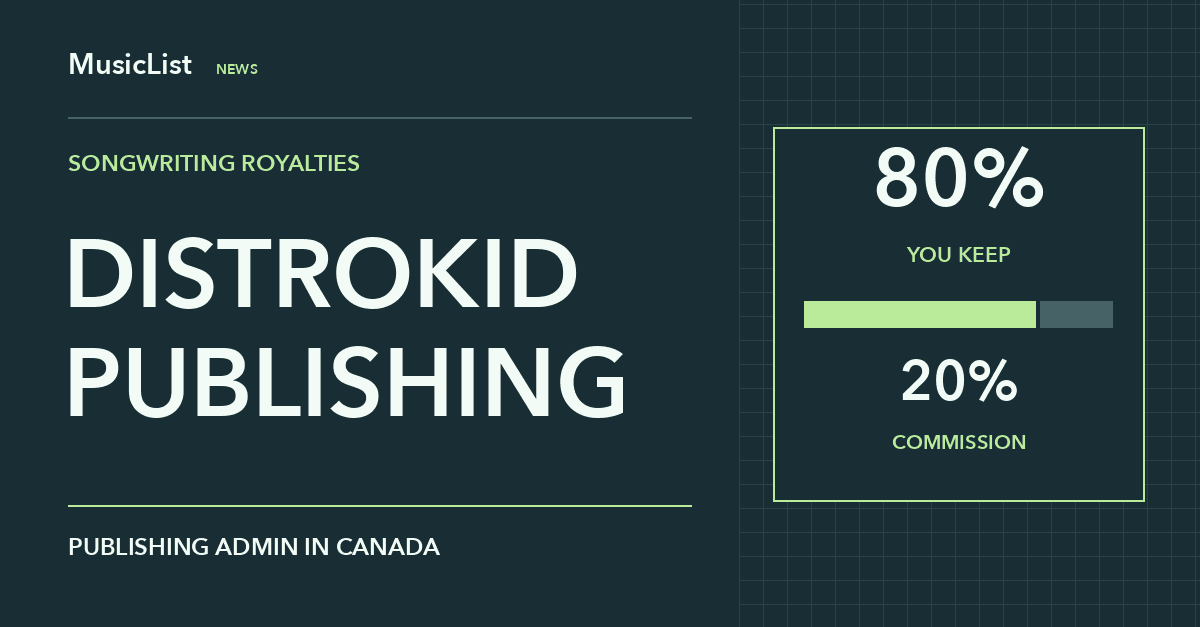
The public price is a one-time US$75 setup fee per songwriter. Writers retain 80% of publishing royalties the service collects, with 20% taken as commission. Those terms concern publishing collection. For a hypothetical US$100 collected under that split, US$80 would remain before considering the separate setup payment. Check the currency and amount at checkout when budgeting in Canadian dollars.[2][1]
Use that example to frame the decision. List the songs you would actually enroll, the collection already in place and the work you are willing to handle yourself. A commission is easier to assess when you know what additional administration you are buying. The public pages cannot establish the extra income a particular Canadian catalogue would generate.
At launch, MBW reported an eligibility threshold of at least one DistroKid release and more than US$50 in streaming earnings over the previous 12 months. The current product page tells members to open Publishing and request an eligibility notification. Check your signed-in account for access before paying or planning a transfer.[1][2]
When payments arrive, and what happens if you leave
The product page says global collection begins after publishing earnings exceed US$10, with a first payment roughly six to nine months later and quarterly payments after that. Its help centre attributes the initial delay to registrations with collecting organizations. Treat those stages as a reason to check reporting rather than forecast a payment immediately after signing up.[2][7]
DistroKid says cancellation takes effect at the end of the calendar quarter in which you cancel. Royalties earned during its mandate can continue to arrive for up to 12 months afterward. If you plan to move to another administrator, keep the effective end date and covered works in writing so both parties know when their responsibilities change.[8]
Before you opt in
Open the official service page, read the terms shown in your account and prepare the details for the songs you control. Original co-writes can qualify. The public eligibility list also restricts titles and writer names to Latin characters. Ask support how an affected name or title should be handled before altering a credit.[5]
Gather each song’s writer names, IPI numbers and agreed composition shares. Keep the recording identifier and the song registration details with the same file.[6][5]
Check existing publishing and reproduction mandates by work, territory and end date. Resolve overlapping collection before enrolling a song.[4][5]
Confirm account eligibility, the fee currency and the collection timeline. Save the accepted terms and track the works you enrolled.[2][7]
MusicList
Your music belongs here.
Artists, musicians and music-industry professionals: claim your free profile to unlock smartlinks, a shareable press kit, and direct booking inquiries.
Find my profileSources
- Music Business Worldwide’s November 11 launch report
- DistroKid Publishing price and collection process
- DistroKid’s supported songwriter societies
- SOCAN reproduction rights FAQ
- Song eligibility and co-writer shares
- How to find the right IPI number
- DistroKid’s payout timing explanation
- Cancellation and trailing royalties
- How publishing administration works