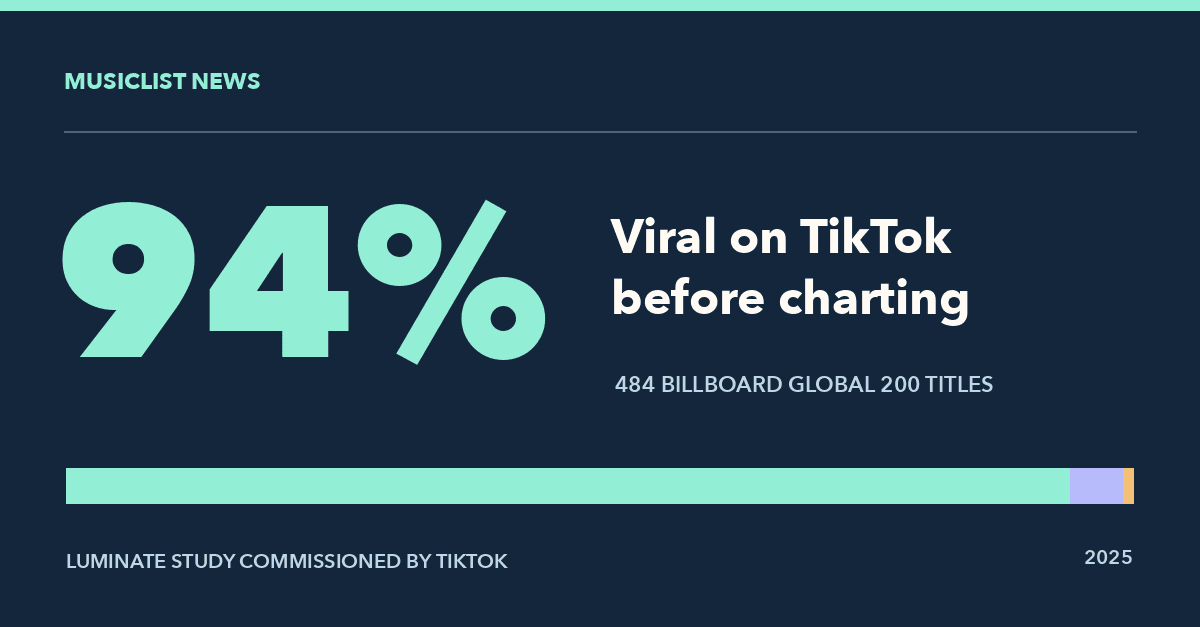
Which songs are in the 94%
The entry analysis looked at March 11 to December 4, 2025, with Christmas and holiday songs excluded. Another 5% of tracks went viral at the same time as or after charting, and 1% had no viral moment tied to charting. In a second analysis of 454 songs with additional exclusions for repeat chart entries, songs with a TikTok viral moment averaged eight weeks on the chart, compared with two weeks for the others.[1]
Both comparisons start from a charted sample. To estimate the chance of charting after a viral post, you would also need to count viral songs that never entered the chart. To isolate what the clips contributed, you would need to account for other activity such as a release campaign, playlist placements or touring. The report’s consumer survey results come from the United States, so use your own audience data to judge what is happening in Canada.[1]
Check the path from the clip to the track
TikTok rolled out Add to Music App in Canada, giving listeners a way to save music to a supported service from eligible posts. Before a release, test with a Canadian account and confirm that the official sound leads to the correct recording. Check the artist name, title and version. A clip can travel with an unofficial upload or a different recording, so make sure the path that your team promotes leads where you expect.[4]
On Spotify for Artists, open the Song or Release overview and go to Segmentation, then Source of Streams. Where compatible, filter to Canada and choose listeners, streams or streams per listener. Active sources include artist pages and listeners’ own libraries. Programmed sources include editorial playlists and personalised recommendations. The chart describes where plays happened within Spotify. Use it to check for changes in listening behaviour alongside your social data.[5]
A seven-day test for one single
Pick a track with a clear reason to listen again, such as a chorus people are already singing at shows. Use the same official sound for two different clips, for example a live performance and a short explanation of how the chorus came together. Keep a daily record of clips, posting times, other promotion and the streaming dates. Spotify records its daily stats in UTC, so line up the time windows before you compare.[5]
Before posting, capture a seven-day baseline for an already released song. For a new single, compare the same release-week window for a similar earlier track and note any differences in support.
During the test, log clip views and measurable link clicks alongside Canadian listeners and active streams. Record playlist additions or paid promotion in the same log.
At the end, look for a change in listening that lasts beyond the busiest day. If views rose while Canadian listening stayed flat, check the link and who saw the posts before increasing spend. If the relevant listeners returned, try a second test before committing a larger budget.
MusicList
Your music belongs here.
Artists, musicians and music-industry professionals: claim your free profile to unlock smartlinks, a shareable press kit, and direct booking inquiries.
Find my profile